.png&w=384&q=75)
Strategic metals play a critical role in the development of high-technology industries, including energy systems, digital technologies, mechanical engineering, and the defense sector. The rapid growth of global demand for rare earth elements, lithium, cobalt, nickel, and other critical raw materials is accompanied by intensified geo-economic competition and increasing risks to the stability of supply chains. Under these conditions, the scientific substantiation of exploration and sustainable supply of strategic metals becomes a key factor of economic and technological security [1, p. 3-6].
The aim of this article is to analyze the theoretical and methodological foundations of exploration and sustainable supply of strategic metals, with an emphasis on the integration of geological, economic, and management approaches under conditions of resource and geopolitical uncertainty.
Main part. Conceptual framework of exploration for strategic metals
Modern exploration of strategic metals is based on an integrated methodological framework that combines classical geological approaches with geophysical, geochemical, digital, and economic instruments [2, p. 831-844]. Unlike traditional linear exploration models, contemporary systems rely on iterative data integration, multi-scale analysis, and continuous economic reassessment of resource potential. As shown in figure 1, the exploration process is currently structured as a closed-cycle system in which geological modeling, data analytics, and techno-economic evaluation are permanently interconnected [3, p. 49-55]. This approach significantly increases the accuracy of resource forecasting, reduces exploration risks, and shortens the time required for decision-making at early stages of project development [4, p. 49-52].
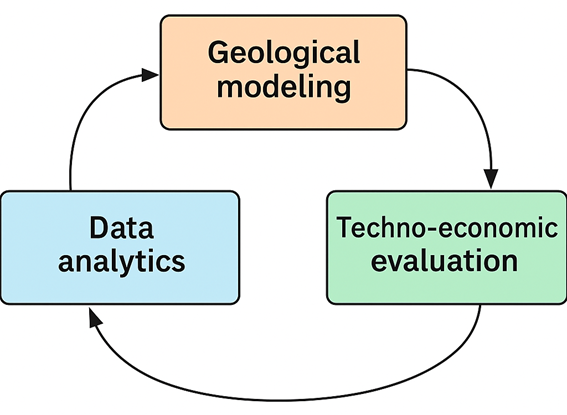
Fig. 1. Integrated framework of strategic metals exploration and evaluation
As illustrated in figure 1, modern exploration of strategic metals is organized as a closed, iterative system in which geological modeling, data analytics, and techno-economic evaluation continuously interact, ensuring permanent refinement of resource estimates, early identification of economic constraints, and dynamic risk adjustment. A key feature of this conceptual model is the integration of sustainability criteria already at the exploration stage, where environmental limitations, ESG requirements, infrastructure accessibility, and supply-chain resilience are treated as integral methodological components [5, p. 20230241]. This shifts the focus from purely resource-based discovery toward the formation of economically viable and environmentally sustainable mineral projects capable of supporting long-term strategic supply under conditions of market volatility and geopolitical uncertainty.
Methodological principles of sustainable supply of strategic metals
Sustainable supply of strategic metals is based on the methodological integration of resource exploration, production planning, processing technologies, recycling, and supply-chain management within a unified strategic framework [6, p. 4-7]. Unlike traditional resource-oriented models, modern approaches emphasize diversification of sources, reduction of critical dependency on individual suppliers, and the development of closed-loop material cycles [7, p. 1-10]. Economic feasibility, environmental impact, and technological resilience are treated as interdependent variables that jointly determine the long-term stability of strategic metal supply. A fundamental methodological principle is the transition from short-term extraction efficiency to lifecycle-based resource management. This includes the assessment of material flows from exploration to end-use and secondary utilization, the incorporation of ESG criteria into investment decision-making, and the application of digital monitoring tools for supply-chain transparency [8, p. 37-39]. Such an approach enhances controllability of strategic metal markets, reduces systemic risks, and supports the formation of resilient industrial ecosystems under conditions of global uncertainty.
Digital support of strategic metals supply chains
Digital technologies form a critical methodological layer for ensuring the stability and transparency of strategic metals supply chains. As shown in figure 2, modern supply systems increasingly rely on the integration of geological databases, production monitoring, logistics platforms, and market analytics into a unified digital environment [9, p. 66-72]. Such integration enables real-time tracking of material flows, early detection of supply disruptions, and rapid adjustment of production and logistics strategies. Digital supply-chain management significantly reduces information asymmetry and improves coordination between exploration, mining, processing, and end-use sectors.
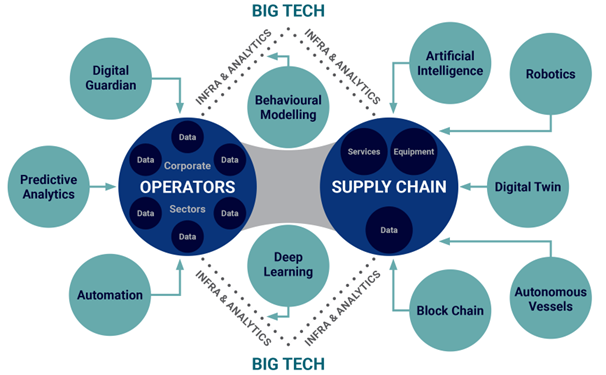
Fig. 2. Digital framework of strategic metals supply chain management
Figure 2 demonstrates the role of digital platforms in synchronizing geological, production, and logistical data within a single information system. The presented framework enhances supply-chain transparency, improves operational controllability, and strengthens the resilience of strategic metals supply under conditions of market volatility and geopolitical uncertainty [10, p. 91-110].
Conclusion
The study demonstrates that modern exploration and sustainable supply of strategic metals are based on integrated, cyclic, and lifecycle-oriented methodological approaches. The combination of geological modeling, digital data analytics, and techno-economic evaluation forms the basis for reliable resource forecasting, while the incorporation of sustainability and ESG principles ensures long-term supply resilience. The proposed conceptual and methodological framework substantiates the transition from purely resource-based strategies to system-oriented models of strategic mineral security.
.png&w=640&q=75)