.png&w=384&q=75)
Warehouse losses of building materials occur during the period between the receipt of products and their delivery to the customer or construction site. These losses include shortages, packaging damage, moisture exposure, caking, corrosion, deformation, contamination, and deterioration of material suitability for use. Their extent depends on the properties of the materials, storage duration, warehouse facilities, and compliance with established procedures. Consequently, building materials account for a significant share of a construction company's operating costs. At the same time, project performance is directly influenced by supply planning, transportation, inventory management, and waste control; therefore, warehouse losses should be regarded as a manageable aspect of warehouse operations [1]. Reducing warehouse losses requires effective management and technical control, achieved by comparing the condition of both the storage environment and the materials with established requirements.
The aim of the study is to develop a method for reducing warehouse losses of building materials through technical control of storage conditions.
The study draws on publications addressing cement storage, the effects of humidity on gypsum, timber, and insulation materials, atmospheric corrosion of steel, and the application of sensors. The research methods include analysis, classification, comparison of technical properties, decomposition of the control process, and structural modelling. The proposed method is intended for enclosed and covered warehouses, while the acceptable limits for temperature, humidity, and storage duration are defined by the manufacturer's specifications. The calculation framework was validated using warehouse data.
Warehouse losses of building materials are defined as a reduction in the quantity or deterioration in the quality of products during their storage period. Quantitative losses include shortages, spillage, breakage, and the loss of individual items. Qualitative losses are associated with moisture exposure, caking, corrosion, warping, contamination, and deterioration of performance characteristics. Operational losses arise during receiving, handling, stacking, and order picking, whereas inventory losses result from labelling errors, misclassification of inventory, and discrepancies between actual stock levels and system records. The classification of warehouse losses is presented in figure 1.
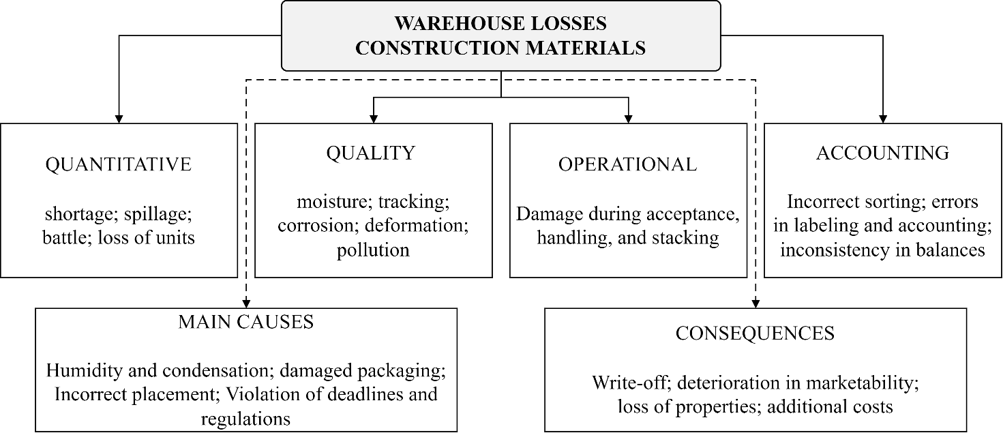
Fig. 1. Classification of warehouse losses of building materials
It should be emphasized that the technical properties of building materials determine their sensitivity to storage conditions. For example, cement and dry mixes absorb water vapour; moisture sorption by mineral components begins before direct contact with water and depends on the relative humidity of the surrounding air [2, p. 1196-1204]. Moisture accumulation reduces the reactivity of the material, promotes caking, and complicates its subsequent use. Therefore, bags should be stored on pallets, kept away from external walls, and protected from condensation.
Gypsum products and materials containing organic components are sensitive to prolonged moisture exposure. When exposed simultaneously to elevated temperatures and high relative humidity, the risk of mould growth on the surface of certain building materials increases [3]. Similarly, timber responds to changes in moisture content through swelling, shrinkage, and biological deterioration. Continuous monitoring of humidity and temperature makes it possible to identify periods of increased risk of timber deterioration and to correct non-compliant storage conditions [4, p. 1575-1582].
For insulation materials, humidity, density, and temperature are critical storage parameters. Moisture exposure increases thermal conductivity and reduces the designed thermal performance of the insulation [5]. Rolled steel products and fasteners are susceptible to atmospheric corrosion, the intensity of which depends on humidity, temperature, airborne contaminants, and alternating wetting and drying cycles [6]. Unitized goods are likewise sensitive to impact damage, overloading of the lower layers, and distortion of stack geometry. In view of the above, the main parameters of technical control can be grouped as shown in table 1.
Table 1
Main parameters of technical control
Material group | Primary risk | Controlled parameters | Control measure |
Cement and dry mixes | Moisture exposure, caking | Humidity, packaging condition, storage period | Pallet storage, isolation from walls, FIFO |
Gypsum products | Moisture exposure, deformation | Humidity, leaks, dimensional stability | Dry storage area, level supporting surface |
Thermal insulation materials | Moisture exposure, compression | Packaging condition, stacking pressure, humidity | Protective film covering, stacking height limits |
Timber | Warping, mould growth | Material moisture content, ventilation | Spacers, air circulation, moisture meter monitoring |
Rolled steel products | Corrosion | Condensation, humidity, surface condition | Covered storage, inspections, protective measures |
Unitized goods | Breakage, chipping | Stacking height, stack stability | Stack restraints, warehouse zone marking |
In general, several groups of causes of warehouse losses can be distinguished:
- technical causes include roof leaks, inadequate ventilation, contact of products with damp floors, overloading of storage racks, and the absence of instrument-based monitoring;
- organizational causes include the mixing of batches, failure to follow the prescribed stock rotation sequence, and irregular inspections;
- technological causes are associated with improper handling, excessive stack height, and the use of unsuitable lifting devices;
- information-related causes are manifested in the absence of alarm thresholds, measurement logs, and a linkage between identified deviations and corrective actions.
At the same time, loss reduction begins with warehouse zoning, in which materials are allocated according to their sensitivity to moisture, mechanical impact, and storage duration. When defining storage zones, consideration is given to cargo movement, storage methods, handling equipment, operational throughput, and the risk of damage. Control points are designated at loading gates, external walls, areas susceptible to leaks, upper storage levels, and locations with restricted air circulation.
Thus, the following methodology (algorithm) for technical control is proposed (fig. 2):
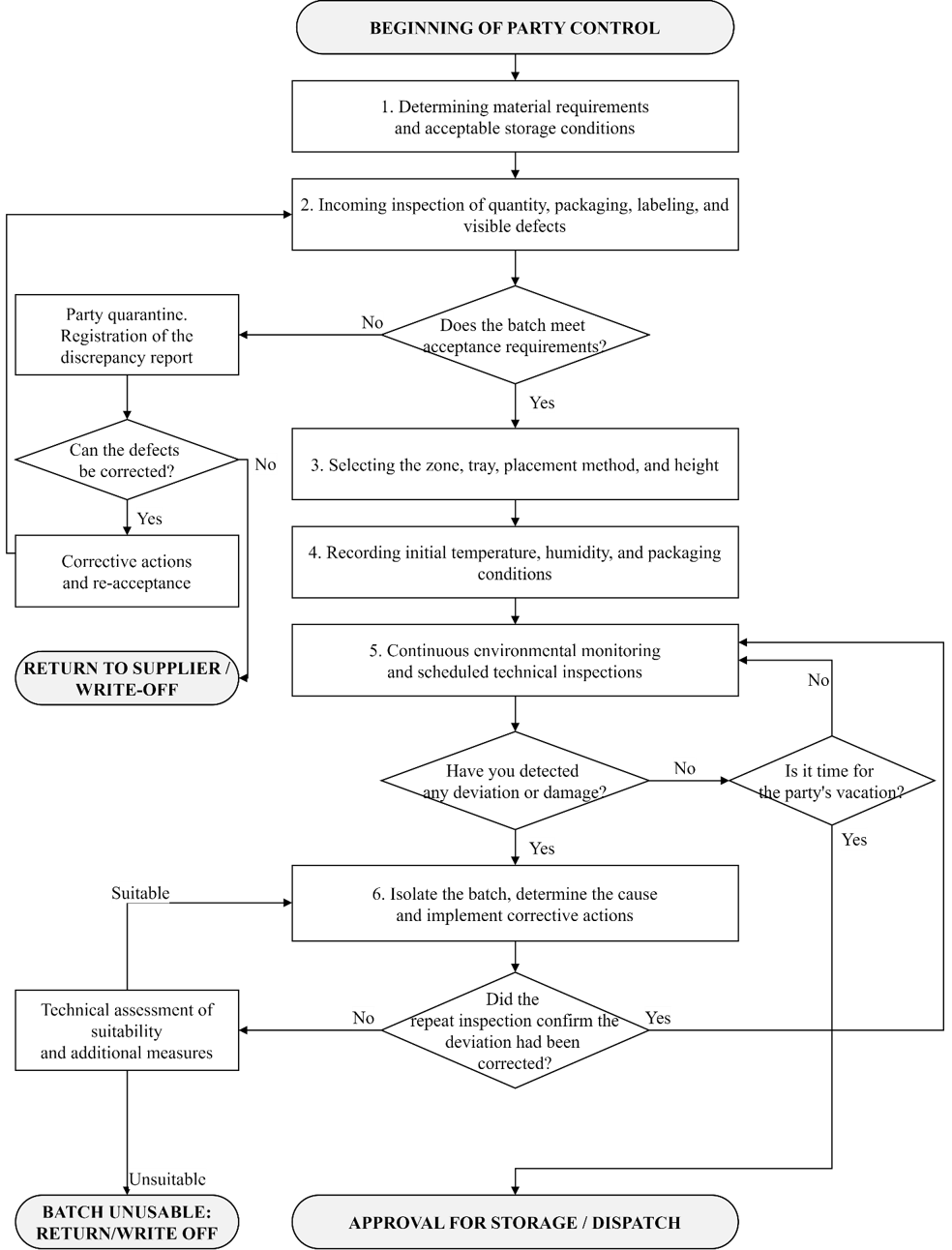
Fig. 2. Algorithm for the technical control of storage conditions for building materials
Instrument-based monitoring should be based on calibrated or preliminarily verified measuring instruments. In particular, low-cost sensors may be used, provided that their temperature and relative humidity measurement performance has been evaluated and found to be acceptable [7]. The minimum set of monitoring equipment includes thermo-hygrometers, data loggers, a wood moisture meter, an infrared thermometer, photographic documentation tools, and an electronic inspection log. Where a warehouse management information system is available, monitoring is further supported by barcode identification, automated notifications, and the recording of the duration for which parameters remain outside the permissible limits. Implementation is recommended to begin with critical storage zones and the materials that account for the highest value of inventory write-offs.
The effectiveness of the proposed methodology is assessed using a system of relative indicators, which enables comparisons across periods with different warehouse throughput volumes. The primary indicator is the warehouse loss coefficient, which incorporates the value of written-off and damaged products, as well as identified inventory shortages. The remaining coefficients reflect packaging integrity, the duration of deviations from prescribed storage conditions, inspection compliance, the effectiveness of corrective actions, and the proportion of direct inventory write-offs:
Kwl = (Wo + Wd + Si) / Vg × 100%, (1)
Where Kwl is the warehouse loss coefficient; Wo is the value of written-off products; Wd is the value of damaged products; Si is the value of identified inventory shortages; and Vg is the value of goods issued from the warehouse during the reporting period. The coefficients used in the assessment are presented in table 2.
Table 2
Indicators and calculation procedure for evaluating the effectiveness of technical control
Indicator | Calculation formula | Interpretation |
Warehouse loss coefficient | Kwl=(Wo+Wd+Si)/Vg×100% | A lower value indicates a reduction in total warehouse losses |
Proportion of damaged packages | Kdp=Ndam/Nins×100% | Ndam = damaged packages; Nins = inspected packages. |
Storage condition deviation coefficient | Ksc=Tdev/Tobs×100% | Tdev = hours during which storage conditions deviated from prescribed limits; Tobs = total observation time. |
Proportion of timely inspections | Kti=Ntim/Nplan×100% | Ntim = inspections completed on time; Nplan = planned number of inspections. |
Repeated deviation coefficient | Krd=Nrep/Ndev×100% | Nrep = repeated deviations; Ndev = total recorded deviations. |
Inventory write-off cost coefficient | Kwo=Wo/Vg×100% | Share of irreversible inventory write-offs relative to the value of goods issued. |
The proposed coefficients were then validated using a pilot assessment. For this purpose, a representative dataset was compiled for a building materials warehouse. During the baseline period, the value of goods issued over three months amounted to 16,350 thousand, while total warehouse losses reached 268 thousand. Following the introduction of warehouse zoning, control points, a measurement log, and mandatory follow-up inspections, the value of goods issued increased to 18,150 thousand, whereas warehouse losses decreased to 130 thousand.
Kwl (before) = 268 / 16,350 × 100% = 1.64%.
Kwl (after) = 130 / 18,150 × 100% = 0.72%.
Reduction in Kwl = (1.64 − 0.72) / 1.64 × 100% = 56.3%.
In addition, the proportion of damaged packages decreased from 4.00% to 1.76%, the proportion of time during which storage conditions were outside the prescribed limits declined from 8.61% to 2.93%, and the coefficient of repeated deviations fell from 39.29% to 15.00%. In contrast, the proportion of inspections completed on time increased from 63.89% to 97.22%. The estimated prevented loss was determined by applying the baseline warehouse loss coefficient to the value of goods issued after implementation and amounted to 167.505 thousand (18,150 × 1.639% − 130) (tab. 3 and fig. 3).
Table 3
Results of the pilot evaluation of the proposed methodology
Indicator | Before implementation | After implementation | Change |
Warehouse loss coefficient, % | 1,64 | 0,72 | −56,3% |
Proportion of damaged packages, % | 4,00 | 1,76 | −56,0% |
Duration of storage condition deviations, % | 8,61 | 2,93 | −66,0% |
Timely inspections, % | 63,89 | 97,22 | +33.33 percentage points |
Repeated deviations, % | 39,29 | 15,00 | −24.29 percentage points |
Inventory write-off costs, % of goods issued | 0,92 | 0,41 | −55,4% |
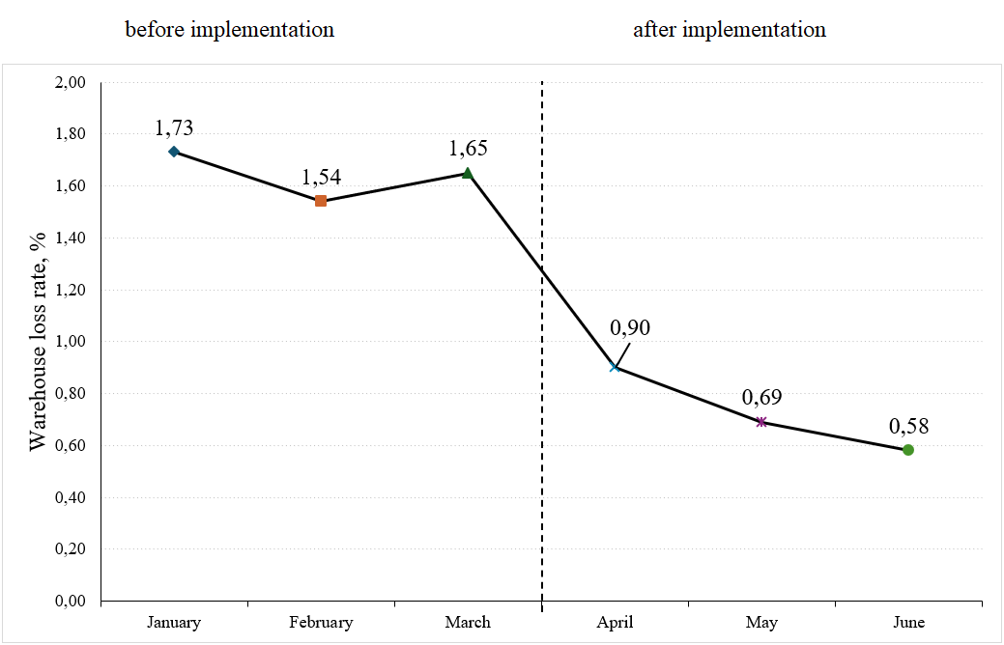
Fig. 3. Dynamics of the warehouse loss coefficient during the pilot evaluation
The obtained results demonstrate that the greatest improvements are associated with a reduction in the duration of deviations from the prescribed storage conditions and a decrease in the number of repeated deviations. Consequently, the observed effect is achieved through the established sequence of measurement, identification of the cause, implementation of corrective actions, and follow-up verification.
Thus, warehouse losses of building materials are determined by the combined interaction of product characteristics, warehouse conditions, and the quality of operational processes. The most significant factors affecting storage conditions include humidity, condensation, packaging damage, stacking pressure, corrosive environments, and failure to comply with the first-in, first-out inventory issuance sequence.
The proposed methodology integrates material-specific requirements, incoming inspection, warehouse zoning, instrument-based monitoring, inspections, and corrective actions into a unified control framework. The pilot evaluation demonstrated a reduction in the warehouse loss coefficient from 1.64% to 0.72%, while the estimated prevented loss amounted to 167.5 thousand. The results confirm the importance of monitoring the duration of deviations from prescribed storage conditions, the timeliness of inspections, and the recurrence of deviations alongside the monetary assessment of inventory write-offs. Future research may focus on scaling the proposed methodology and extending its application to more complex warehouse systems and logistics facilities.
.png&w=640&q=75)