.png&w=384&q=75)
1. Introduction
Internationalization has become a central component of higher education development worldwide. According to UNESCO statistics, global student mobility continues to increase, particularly within Eurasian educational cooperation frameworks [1]. Kazakhstan has strengthened academic cooperation with China through bilateral agreements and participation in regional initiatives such as the Belt and Road framework [2].
At the same time, Kazakhstan joined the European Higher Education Area and adopted the Bologna Process principles, including a three-cycle degree structure and credit-based education system [3]. These reforms aim to enhance quality assurance, transparency, and international compatibility. However, curriculum restructuring and pedagogical modernization also create management challenges for universities hosting international students.
This study examines how curriculum reform and pedagogical transformation affect the management of Chinese students’ educational processes in Kazakhstan.
2. Curriculum Reform in Kazakhstan
Kazakhstan formally joined the Bologna Process in 2010, becoming the first Central Asian country to do so [3]. Curriculum reform emphasizes learning outcomes, academic mobility, and modular program design.
The Ministry of Science and Higher Education of Kazakhstan has introduced reforms focused on competency-based education and digital transformation [4]. These changes require students to engage in independent research, continuous assessment, and project-based learning.
In contrast, the Chinese higher education system traditionally follows a more structured and examination-oriented approach [5]. Although China is also promoting modernization and innovation-driven development, classroom organization and evaluation methods may differ significantly from those in Kazakhstan.
As a result, Chinese students may face difficulties in adapting to flexible course selection systems and independent learning expectations.
3. Pedagogical Model Transformation
Recent reforms in Kazakhstani universities emphasize student-centered learning and digital platforms. The COVID-19 pandemic accelerated the shift toward hybrid and online teaching models worldwide [6]. UNESCO reports highlight the importance of digital resilience and adaptive governance in higher education [6].
The OECD notes that pedagogical innovation improves learning outcomes when supported by institutional management and faculty development [7]. For Chinese students studying in Kazakhstan, differences in classroom interaction patterns and academic communication styles may influence performance and integration.
Effective management must therefore include systematic academic orientation programs and clear communication of assessment criteria.
4. Management Challenges in the Educational Process
Educational management theory emphasizes coordination between governance structures, curriculum design, and student services [8]. In practice, universities may encounter fragmentation between academic departments and international offices.
Language barriers, unfamiliar assessment systems, and limited intercultural training for faculty can reduce academic effectiveness. The World Bank emphasizes that institutional capacity and governance coherence are critical for improving higher education performance [9].
Therefore, managing the educational process of Chinese students requires institutional integration rather than isolated administrative measures.
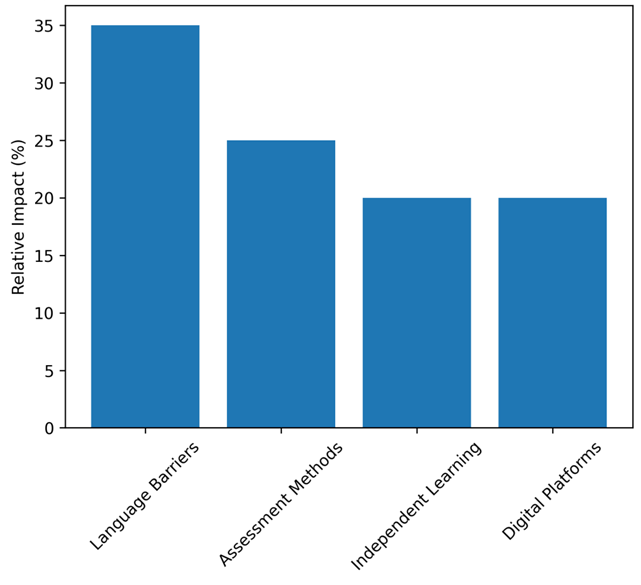
Fig. 1. Presents the main adaptation challenges faced by Chinese students under curriculum and pedagogical reform conditions.
5. Strategies for Improvement
Improving management effectiveness involves strengthening academic advising systems, enhancing digital transparency, and integrating intercultural competence into institutional policy.
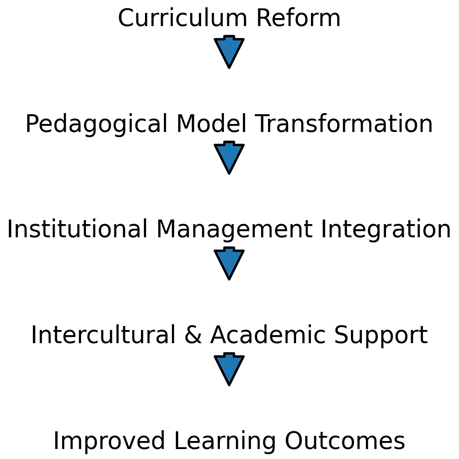
Fig. 2. Illustrates the integrated pathway linking curriculum reform, pedagogical transformation, institutional coordination, and student support mechanisms
Universities should ensure that curriculum requirements, grading systems, and academic expectations are clearly communicated.
Digital platforms can provide bilingual information and monitoring systems that track academic progress. Research indicates that data-informed governance enhances student retention and performance [9].
Furthermore, cooperation between Kazakhstan and China in higher education policy may contribute to curriculum alignment and mutual recognition of qualifications.
6. Conclusion
Curriculum reform and pedagogical model transformation in Kazakhstan create new requirements for managing international students’ educational processes. For Chinese students, adaptation depends not only on individual effort but also on institutional governance structures and academic support mechanisms. Effective management must combine curriculum transparency, digital innovation, intercultural competence, and coordinated policy implementation. Strengthening these elements will enhance academic outcomes and deepen educational cooperation between Kazakhstan and China.
.png&w=640&q=75)