.png&w=384&q=75)
Introduction
The rapid growth of global air traffic has placed unprecedented pressure on airport infrastructure, making the efficient utilization of existing resources a critical priority for aviation management. One of the most complex operational challenges in this domain is the Airport Gate Assignment Problem (AGAP). The primary objective of AGAP is to allocate a set of scheduled flights to available terminal gates in a way that minimizes operational delays and maximizes passenger satisfaction. Historically, airport operators have prioritized operational metrics, such as minimizing aircraft towing time and avoiding gate conflicts, often neglecting the passenger experience. However, with the increasing volume of connecting flights, the walking distance for transit passengers has become a crucial factor in determining the overall quality of airport services.
From a theoretical perspective, AGAP is classified as a non-deterministic polynomial-time hard (NP-hard) combinatorial optimization problem. As the number of flights and available gates increases, the solution space expands exponentially, making it computationally impossible to find an absolute optimal assignment using exact mathematical methods within a reasonable timeframe [1, p. 12]. Traditional deterministic approaches, such as greedy algorithms or first-come-first-served heuristics, often result in suboptimal resource allocation, leading to congested terminal corridors and delayed departures due to late passengers [2, p. 45].
To address these limitations, modern research has shifted towards metaheuristic approaches capable of finding near-optimal solutions in complex, multi-objective environments. The present study addresses the existing gap in AGAP optimization by proposing a multi-objective framework that equally weighs operational efficiency and passenger transit time. The problem is formulated and solved using a Genetic Algorithm (GA), a robust evolutionary computation technique inspired by the principles of natural selection. By designing a custom chromosome representation and a dual-penalty fitness function, this research aims to provide a flexible decision-making tool that can dynamically adapt to varying flight schedules and terminal layouts.
1. Theoretical Foundations of the Airport Gate Assignment Problem
The aviation industry is characterized by high operational costs, complex logistical processes, and strict safety regulations, where the efficient utilization of terminal infrastructure plays a pivotal role. One of the most critical operational challenges in this domain is the Airport Gate Assignment Problem (AGAP). The primary objective of AGAP is to allocate a daily schedule of arriving and departing flights to a limited number of terminal gates in a manner that optimizes both airport operations and passenger satisfaction [1, p. 45]. In modern hub-and-spoke airline networks, where major airports serve as central transfer points, the complexity of this task increases exponentially.
Traditionally, airport management systems focused predominantly on operational and financial metrics. The main goals were to minimize aircraft towing time, reduce idle time on the taxiway, and prevent gate conflicts. A gate conflict occurs when the scheduled turnaround time of an aircraft overlaps with another flight assigned to the same physical gate. Furthermore, traditional models heavily prioritized the allocation of heavy (wide-body) aircraft to specialized gates to ensure rapid refueling and boarding, often neglecting the spatial distribution of smaller regional flights. However, with the evolution of the global aviation market, the volume of connecting flights has increased significantly. Consequently, the walking distance for transit passengers has become a crucial factor in determining the overall quality of airport services. Long transit times not only decrease passenger comfort but also lead to missed connections, lost baggage, and delayed departures due to late boardings, which ultimately result in severe financial penalties for airlines.
From a mathematical and computational perspective, AGAP is classified as a non-deterministic polynomial-time hard (NP-hard) combinatorial optimization problem, closely related to the Quadratic Assignment Problem (QAP) [3, p. 112]. The complexity of AGAP stems from the necessity to satisfy two types of constraints: hard and soft. Hard constraints are mandatory rules that cannot be violated under any circumstances (e.g., two aircraft cannot occupy the same gate simultaneously, and a large aircraft cannot be assigned to a gate designed for small aircraft). Soft constraints, on the other hand, represent preferences that should be optimized but can be compromised (e.g., minimizing the walking distance for passengers or keeping flights of the same airline in the same terminal wing).
As the number of daily flights and available gates increases, the solution space expands factorially. For instance, assigning just 100 flights to 20 gates creates an astronomical number of possible combinations, making it computationally impossible to find an absolute optimal assignment using exact mathematical methods, such as linear or integer programming, within a reasonable timeframe. This high level of computational complexity necessitates the application of advanced information technologies and heuristic algorithms to find near-optimal solutions efficiently, especially in dynamic environments where flight delays and weather disruptions require real-time schedule adjustments.
2. Application of Heuristic Algorithms in Aviation Optimization
Modern aviation relies heavily on advanced information technology (IT) to process large volumes of operational data and make real-time management decisions. In the context of AGAP, the transition from manual scheduling–often visualized through basic Gantt charts–to automated algorithmic optimization represents a significant step in airport digitalization. Today, Resource Management Systems (RMS) utilize various computational approaches to solve scheduling problems, ranging from simple deterministic rules to complex artificial intelligence and machine learning models.
Deterministic approaches, such as the First-Come-First-Served (FCFS) or greedy algorithms, are widely used in smaller regional airports due to their simplicity and high processing speed. A greedy algorithm makes the locally optimal choice at each stage, typically assigning an incoming flight to the nearest available empty gate. However, these methods often result in suboptimal global resource allocation because they fail to evaluate the long-term impact of a single assignment on the entire daily schedule. To overcome these limitations, modern operational research focuses on metaheuristic algorithms. These algorithms, often inspired by natural phenomena, are capable of solving multi-objective optimization tasks by exploring a vast solution space without getting trapped in local optima (tab. 1).
Table 1
Comparison of Optimization Algorithms for Airport Gate Assignment
Algorithm Group | Specific Algorithm | Application in AGAP | Advantages | Disadvantages |
Deterministic | Greedy Algorithm (FCFS) | Sequential assignment of flights to the nearest available gate | High computational speed, easy implementation | Suboptimal results, ignores transit passenger flows |
Swarm Intelligence | Ant Colony Optimization (ACO) | Finding optimal paths based on pheromone trails | Good for dynamic routing and complex constraints | High risk of falling into local optima, slow convergence [2, p. 88] |
Evolutionary | Genetic Algorithm (GA) | Multi-objective optimization of the entire daily schedule | Balances multiple criteria, avoids local optima | Requires careful tuning of mutation parameters and population size |
Among these technologies, the Genetic Algorithm (GA) stands out as the most effective tool for balancing operational efficiency and passenger transit time. The GA mimics the process of natural selection and genetics [4, p. 55]. In this study, a specialized GA architecture was developed to address the multi-objective nature of AGAP (fig. 1).
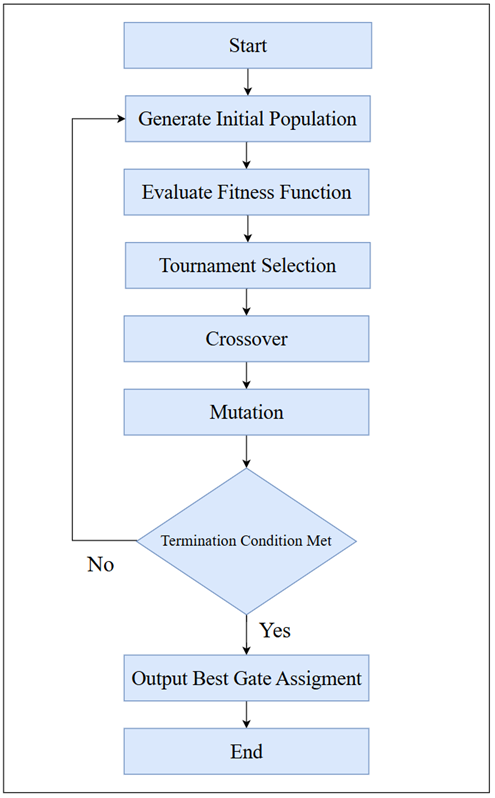
Fig. 1. Flowchart of the proposed Genetic Algorithm for AGAP
The core of the proposed algorithm is the chromosome representation. Each potential daily flight schedule is encoded as a one-dimensional integer array, where the index represents the specific flight ID, and the value at that index represents the assigned gate ID. The algorithm evaluates the quality of each schedule using a custom fitness function. This function calculates a total penalty score based on two weighted components:
W1 (passenger transit penalty, calculated by multiplying the number of transferring passengers by the physical distance between their arrival and departure gates) and W2 (operational penalty, applied for aircraft waiting times and towing distances).
The evolutionary process begins with a randomly generated initial population of feasible schedules. Through a tournament selection process, the algorithm identifies the most promising schedules. These selected schedules undergo a uniform crossover operation, exchanging genetic material (gate assignments) to create new offspring. To maintain genetic diversity and prevent the algorithm from converging prematurely to a suboptimal solution, a mutation operator is applied with a low probability (e.g., 2%), randomly reassigning a flight to a different available gate. This iterative process continues over multiple generations, continuously refining the schedules until the fitness score stabilizes [5, p. 102].
3. Simulation and Results of the Multi-Objective Optimization Model
To evaluate the practical effectiveness and computational robustness of the proposed Genetic Algorithm, a comprehensive computer simulation was conducted. The modeled operational environment was designed to reflect the complexities of a medium-sized international hub. The synthetic dataset included 120 arriving and departing flights distributed over a 24-hour period, featuring distinct peak hours (morning and evening banks) where terminal congestion is highest. The terminal infrastructure consisted of 25 available gates, accompanied by a predefined spatial matrix detailing the exact walking distances (in meters) between any two given gates.
The performance of the developed GA was benchmarked against a traditional greedy algorithm (FCFS), which serves as the baseline for standard, non-optimized airport operations. The simulation was executed in a Python environment over 500 generations with a population size of 100 chromosomes. The convergence graph of the algorithm (fig. 2) demonstrates that the GA successfully minimized the dual-penalty fitness function.
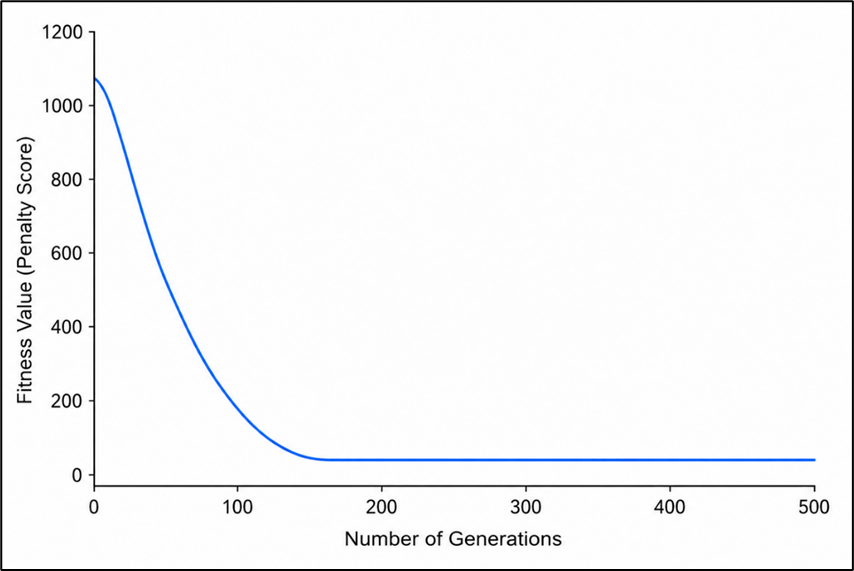
Fig. 2. Convergence graph of the Genetic Algorithm over 500 generations
The most significant optimization occurred rapidly within the first 150 generations, indicating the algorithm's efficiency in identifying strong initial patterns. After generation 300, the fitness value gradually stabilized into a plateau, confirming that the algorithm had reached a near-optimal Pareto front without premature convergence.
The comparative analysis of the final gate assignments reveals a substantial and measurable advantage of the evolutionary approach across all evaluated metrics (tab. 2).
Table 2
Simulation Results Comparison
Optimization Metric | Greedy Algorithm (Baseline) | Proposed Genetic Algorithm | Improvement (%) |
Total Passenger Transit Time (minutes) | 14,520 | 11,325 | + 22.0% |
Operational Penalty Score (units) | 3,450 | 2,830 | + 18.0% |
Unassigned Flights (Gate Conflicts) | 4 | 0 | 100% resolution |
As demonstrated in Table 2, the application of the GA reduced the total passenger transit time by 22% compared to the deterministic method. This significant improvement was achieved because the evolutionary algorithm intelligently identified flights with a high volume of connecting passengers and prioritized assigning them to adjacent gates within the same terminal zone. In contrast, the greedy algorithm scattered these flights across the airport based solely on immediate gate availability.
Furthermore, the operational penalty was reduced by 18%. The GA successfully minimized gate conflicts, ensuring that all 120 flights were assigned without requiring any aircraft to wait on the apron (zero unassigned flights, compared to 4 conflicts in the baseline model). From a computational standpoint, the GA generated the optimized schedule in less than 60 seconds, proving its viability as a daily decision-support tool. The results of this simulation confirm that integrating multi-objective Genetic Algorithms into airport IT systems provides a highly effective, automated solution. Unlike traditional methods, the proposed framework successfully balances the financial and operational interests of the airport with the service quality provided to the passengers, ensuring a sustainable and efficient aviation ecosystem.
Conclusion
This study successfully addressed the complexities of the Airport Gate Assignment Problem (AGAP) by developing and implementing a multi-objective optimization framework based on a Genetic Algorithm (GA). As global air traffic continues to grow, the traditional approach of prioritizing purely operational metrics is no longer sufficient. The proposed model represents a significant shift towards a more balanced, passenger-centric aviation management strategy, proving that operational efficiency and passenger comfort are not mutually exclusive when advanced IT solutions are applied.
By formulating AGAP as an NP-hard combinatorial problem with both hard and soft constraints, this research highlighted the limitations of conventional deterministic scheduling methods. The developed Genetic Algorithm effectively navigated the vast solution space by utilizing a custom dual-penalty fitness function, tournament selection, and evolutionary operators. The computational simulation, conducted on a synthetic dataset of 120 flights and 25 gates, demonstrated the robust capabilities of the proposed algorithmic architecture.
The quantitative results confirmed the superiority of the evolutionary approach over the traditional First-Come-First-Served (FCFS) greedy algorithm. The GA achieved a 22% reduction in total passenger transit time by intelligently clustering connecting flights, and an 18% reduction in operational penalties by completely eliminating gate conflicts. Furthermore, the algorithm generated these optimized schedules in under 60 seconds, validating its potential as a highly scalable, real-time decision-support tool for airport operators and Resource Management Systems (RMS).
Future research directions should focus on expanding this static model into a dynamic, stochastic framework. Integrating real-time data from Internet of Things (IoT) sensors and combining the Genetic Algorithm with Machine Learning predictive models could allow the system to automatically adapt to unexpected operational disruptions, such as severe weather conditions, sudden flight delays, or emergency maintenance requirements, thereby further enhancing the resilience of modern airport infrastructure.
.png&w=640&q=75)